Why is it important to leverage buyouts?

Elijah King
Published Jan 20, 2026
One of the main advantages of a leveraged buyout is the ability to sell a business that might not be at its peak performance but still has cash flow and the potential for growth. If an LBO improves a company’s market position – or even saves it from failure – the shareholders and employees stand to benefit.
Why free cash flow is so important?
Free cash flow is important because it allows a company to pursue opportunities that enhance shareholder value. Without cash, it’s tough to develop new products, make acquisitions, pay dividends and reduce debt. If free cash flow is negative, it could be a sign that a company is making large investments.
Does leverage affect free cash flow?
Effect on the Cash Flows: Since we have considered the cases of share repurchase and share buybacks separately, the change in leverage can be zeroed down to one single factor i.e. the change in debt. In the event of paying off a debt or raising new debt, there will be no effect on the free cash flow to the firm.
What is free cash flow FCF and why is it important?
Free cash flow (FCF) is the cash a company generates after taking into consideration cash outflows that support its operations and maintain its capital assets. Free cash flow is an important measurement since it shows how efficient a company is at generating cash.
What makes an LBO attractive?
An LBO candidate is considered to be attractive when the business characteristics show sustainable and healthy cash flow. Indicators such as business in mature markets, constant customer demand, long term sales contracts, and strong brand presence all signify steady cash flow generation.
Are leveraged buyouts good?
Leveraged buyouts (LBOs) have probably had more bad publicity than good because they make great stories for the press. However, not all LBOs are regarded as predatory. They can have both positive and negative effects, depending on which side of the deal you’re on.
Why is it important to know about levered free cash flow?
What is ‘Levered Free Cash Flow’. Levered free cash flow (LFCF) is the amount of cash a company has left remaining after paying all of its financial obligations. Levered free cash flow is important to both investors and company management, because it is the amount of cash that a company can use to pay dividends to shareholders and/or…
How does debt work in a leveraged buyout?
This steady cash flow is what enables the company to easily service its debt. In the example below you can see in the charts how all available cash flow goes towards repaying debt and the total debt balance (far right chart) steadily decreases over time. The above screenshot is from CFI’s LBO Model Training Course.
What’s the difference between a leveraged buyout and a LBO?
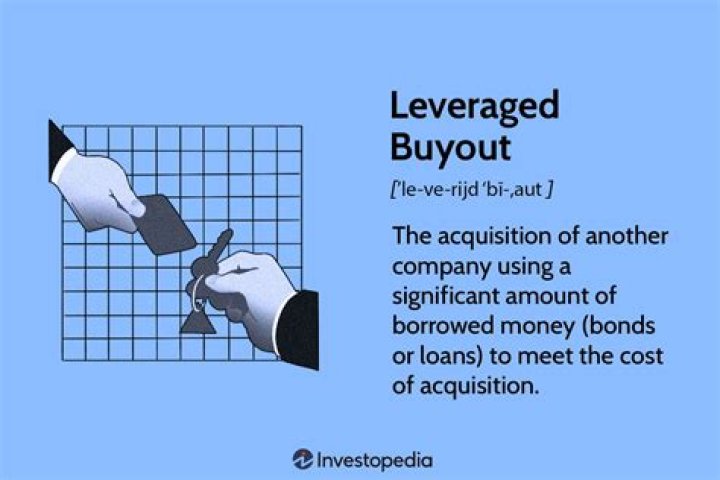
A leveraged buyout, also called an LBO, is a financial transaction in which a company is purchased with a combination of equity and debt so the company’s cash flow is the collateral used to secure and repay the borrowed money.
What makes a good candidate for a leveraged buyout?
Generally speaking, companies that are mature, stable, non-cyclical, predictable, etc. are good candidates for a leveraged buyout. Given the amount of debt that will be strapped onto the business, it’s important that cash flowsCash FlowCash Flow (CF) is the increase or decrease in the amount of money a business, institution, or individual has.