Why are lower interest rates good for bonds?

Sarah Martinez
Published Jan 20, 2026
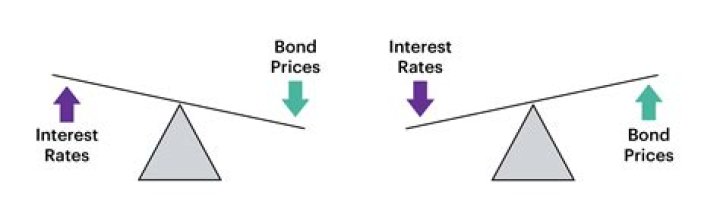
Most bonds pay a fixed interest rate that becomes more attractive if interest rates fall, driving up demand and the price of the bond. Conversely, if interest rates rise, investors will no longer prefer the lower fixed interest rate paid by a bond, resulting in a decline in its price.
Why are bonds with lower coupon rates more sensitive to interest?
Generally, bonds with long maturities and low coupons have the longest durations. These bonds are more sensitive to a change in market interest rates and thus are more volatile in a changing rate environment. Because bonds with shorter maturities return investors’ principal more quickly than long-term bonds do.
How do interest rates affect corporate bonds?
There is an inverse relationship between market interest rates and the prices of corporate bonds. When interest rates move up, bond prices go down. When interest rates fall, you are likely to see bond prices moving upward.
What happens to bond interest rates as credit ratings change?
If bonds are downgraded (that is, if the credit rating is lowered), the bond price declines. If the rating is upgraded, the price goes up. The change in price corresponds to the amount necessary to bring the yield of a bond (and therefore its price) in line with other bonds rated at the same level.
When interest rates rise on US Treasury securities What happens to rates on corporate bonds?
A fundamental principle of bond investing is that market interest rates and bond prices generally move in opposite directions. When market interest rates rise, prices of fixed-rate bonds fall. this phenomenon is known as interest rate risk.
What happens if the coupon is higher than the interest rate?
If a coupon is higher than the prevailing interest rate, the bond’s price rises; if the coupon is lower, the bond’s price falls. The majority of bonds boast fixed coupon rates that remain stable, regardless of the national interest rate or changes in the economic climate.
What happens to the price of a corporate bond when interest rates rise?
This, in turn, drives up the price of the bondholder’s corporate bond. On the other hand, rising interest rates and a widening of the credit spread work against the bondholder by causing a higher yield to maturity and a lower bond price.
Why are bond prices lower than their par value?
This is because bond prices and YTMs move in opposite directions. If interest rates are higher than the bond’s coupon rate, bond prices must decrease below the par value (discount bond) so that the YTM moves closer to the interest rates. Similarly, if interest rates drop below the coupon rate,…
How is the coupon rate on a bond determined?
Coupon interest rates are determined as a percentage of the bond’s par value, also known as the “face value.”. Coupon rates are largely influenced by national government-controlled interest rates. This means that if the minimum interest rate is set at 5%, no new bonds may be issued with coupon rates below this level.