What is the difference between clean claims and dirty claims?

Christopher Harper
Published Jan 20, 2026
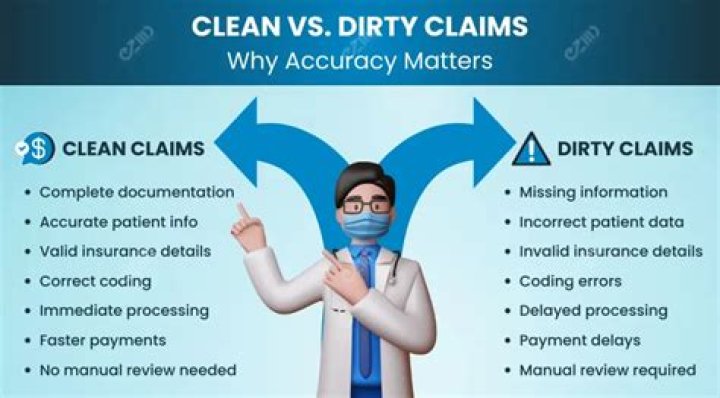
Clean claims are paid the first time and are never rejected. The dirty claim definition is anything that’s rejected, filed more than once, contains errors, has a preventable denial, etc.
What is clean claim in medical billing?
A clean medical claim is one that has no mistakes and can be processed without additional information from the provider or a third party. It’s correct from top to bottom.
Why is it important to create a clean claim?
Submitting clean claims is one of the most important ways that a diagnostic organization can ensure payment in a timely manner from both private and government insurance payors. Receiving the maximum reimbursement the first time a claim is submitted is crucial to achieving desired operating margins.
How can I increase my clean claim rate?
Revenue Cycle: 5 Tips to Improve Your Organization’s Clean-Claims Rate
- Target the Root Cause.
- Take the guesswork out of eligibility.
- Make sure you’re built to handle bundled-payment programs.
- Understand medical necessity.
- Eliminate simple mistakes – aka human error.
- Pay close attention to the dual eligible.
How do you clean a claim?
Four tips for ensuring clean claims.
- The number one most important factor in submitting a clean claim is documentation, documentation and more documentation.
- Always review denied claims.
- Make sure your team knows your payers (and their requirements/policies/processes) better than they know themselves.
What makes a clean claim?
Clean claim definition A clean claim is a submitted claim without any errors or other issues, including incomplete documentation that delays timely payment. There are several required elements for a clean claim, and medical bills are denied if elements are incomplete, illegible or inaccurate.
What is meant by clean claim?
1. Clean claim defined: A clean claim has no defect, impropriety or special circumstance, including incomplete documentation that delays timely payment.
What is a clean claim rate?
Clean claims not only have no incomplete or inaccurate documentation that delays timely payments, but also for legal reasons. If your medical practice has a 95% “clean claims” rate, then that means that all but 5% of claims get to payers with no mistakes upon the first submittal.
What are the risks to the billing process if claims are not clean?
When the government and insurance companies deny claims with medical billing and coding errors. Your EM group loses reimbursement revenue until you can correct and resubmit a clean claim. The most common medical billing and coding errors lead to high denial rates and may compromise patient care.
What is an other than clean claim?
Claims that do not meet the definition of “clean” claims are “other-than-clean” claims. “Other-than-clean” claims require investigation or development external to the contractor’s Medicare operation on a prepayment basis.
What are the elements of a clean claim?
Elements of a Clean Claim. Clean claim defined: A clean claim has no defect, impropriety or special circumstance, including incomplete documentation that delays timely payment. A provider submits a clean claim by providing the required data elements on the standard claims forms, along with any attachments and additional elements,…
What makes a medical bill a clean claim?
A clean claim is a submitted claim without any errors or other issues, including incomplete documentation that delays timely payment. There are several required elements for a clean claim, and medical bills are denied if elements are incomplete, illegible or inaccurate.
What do you mean by clean claim rate?
What Is Clean Claim Rate? Working in the healthcare IT space, chances are good that you’ve encountered the term “clean claim rate” (CCR) at some point.
When do I need to file a clean claim report?
A Clean Claim Report must be filed with the Office of Financial and Insurance Regulation for each claim that a health plan has not timely paid. View a Clean Claim Report here. A clean claim must be paid and corrected of all known defects within 45 days after it is received by the health plan.