What happens when the stock market bubbles?

Matthew Underwood
Published Jan 20, 2026
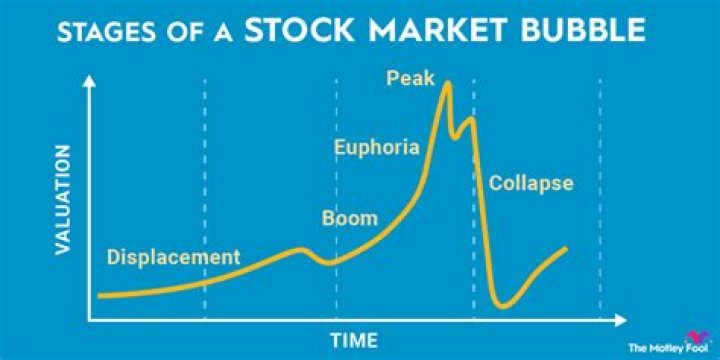
What happens when a stock market bubble bursts. All stock market bubbles eventually burst, meaning that stock prices suddenly and sharply decline. While any number of events can lead to a market bubble bursting, crashes often occur after a key source of credit dries up.
Why is a stock market bubble bad?
When an asset price begins rising at a rate appreciably higher than the broader market, opportunistic investors and speculators jump in and bid the price up even more. The expectation of future price appreciation in the bubble assets itself drives buyers to bid prices higher.
What is a stock market bubble and why might it be a worry?
A stock market bubble happens when a stock costs a lot more than it’s worth or the market in general is overvalued. If you put your money in the market, you want to get back more than you put in. In my trades, I aim to get back three times as much money as I can accept losing.
What causes economic bubbles to burst?
During a bubble, investors continue to bid-up the price of an asset beyond any real, sustainable value. Eventually, the bubble “bursts” when prices crash, demand falls, and the outcome is often reduced business and household spending and a potential decline in the economy.
What burst the dot com bubble?
The dotcom crash was triggered by the rise and fall of technology stocks. The growth of the Internet created a buzz among investors, who were quick to pour money into startup companies. These companies were able to raise enough money to go public without a business plan, product, or track record of profits.
How do you tell if the market is in a bubble?
Watch for these tell-tale signs of a stock market bubble
- A story has captured the market’s imagination.
- Prices rise regardless of news.
- Other asset prices are soaring, too.
- New traders say that old investors ‘don’t get it’
- Stock valuations in the top percentiles.
What happens when the stock market goes into a bubble?
Because speculative demand, rather than intrinsic worth, fuels the inflated prices, the bubble eventually but inevitably pops, and massive sell-offs cause prices to decline, often quite dramatically. In most cases, in fact, a speculative bubble is followed by a spectacular crash in the securities in question.
When was the last time there was an asset bubble?
The stock market bubble of the 1920s, the dot-com bubble of the 1990s, and the real estate bubble of the 2000s were asset bubbles followed by sharp economic downturns. Asset bubbles are especially devastating for individuals and businesses who invest too late, meaning shortly before the bubble bursts.
What happens to the economy when a bubble pops?
Market psychology and emotions like greed and herding instincts are thought to provide fuel for bubbles. When bubbles eventually pop, they tend to leave economic pain in their wake including recession or even depression.
Which is a prime cause of asset bubbles?
However, classical liberal economists think the Fed is unnecessary and that its interventions distort markets, yielding negative consequences. They see central bank monetary policies as a prime cause of asset bubbles.