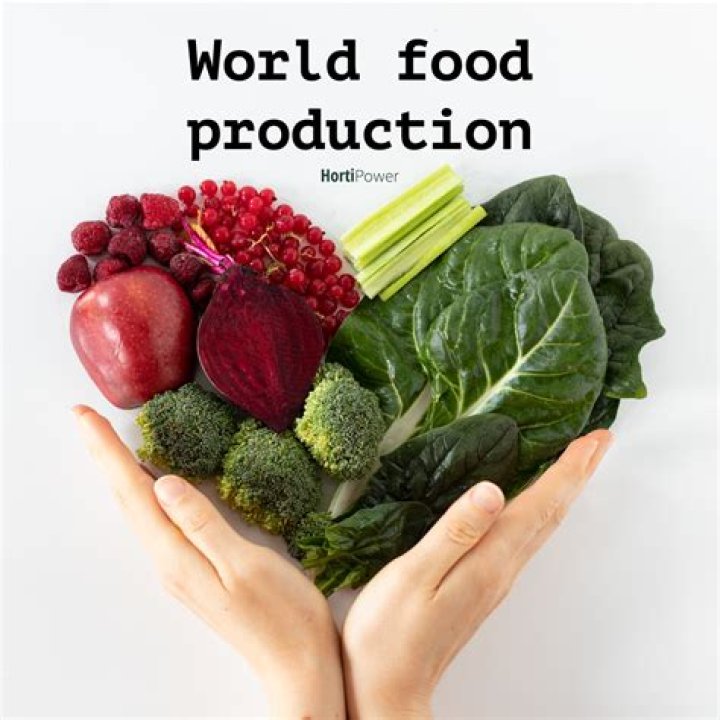
What is the world food production?
However, global food production is incredibly efficient. The world’s farmers produce enough food to feed 1.5x the global population. That’s enough to feed...
Knowledge Base
Latest insights and tutorials from the The Daily Horizon team.
When can I stop paying Medicare tax?
Unlike Social Security taxes that stop at $106,800 in earnings each year, Medicare taxation covers all of your earned income. Medicare withholding stops o...
Read More →Can you deduct stock losses from income?
Realized capital losses from stocks can be used to reduce your tax bill. If you don’t have capital gains to offset the capital loss, you can use a capital...
Read More →How does the earned income tax credit work?
The Earned Income Tax Credit (EITC) helps low- to moderate-income workers and families get a tax break. If you qualify, you can use the credit to reduce t...
Read More →Which states do not tax pensions and Social Security?
Alaska, Nevada, Washington, and Wyoming don’t have state income taxes at all, and Arizona, California, Hawaii, Idaho, and Oregon have special provisions e...
Read More →Which business is a separate legal entity?
A corporation is a legal entity that is separate and independent from the people who own or run the corporation, namely shareholders. A corporation has th...
Read More →Do banks have tax forms?
A 1099-INT tax form is a record that someone — a bank or other entity — paid you interest. If you earned more than $10 in interest from a bank, brokerage ...
Read More →How are the size of the tax and the deadweight loss of a tax related?
Where a tax increases linearly, the deadweight loss increases as the square of the tax increase. This means that when the size of a tax doubles, the base ...
Read More →Can I claim 4 dependents on my W4?
The number of allowances you claim on your W-4 doesn’t have to match the actual number of dependents or family members you have on your tax return. There ...
Read More →How much do you get for claiming a child as a dependent?
The credit amount is up to $2,000 per qualifying dependent child 16 or younger at the end of the calendar year. There is a $500 nonrefundable credit for q...
Read More →