Can you retroactively contribute to Roth 401k?

Mia Cox
Published Jan 03, 2026
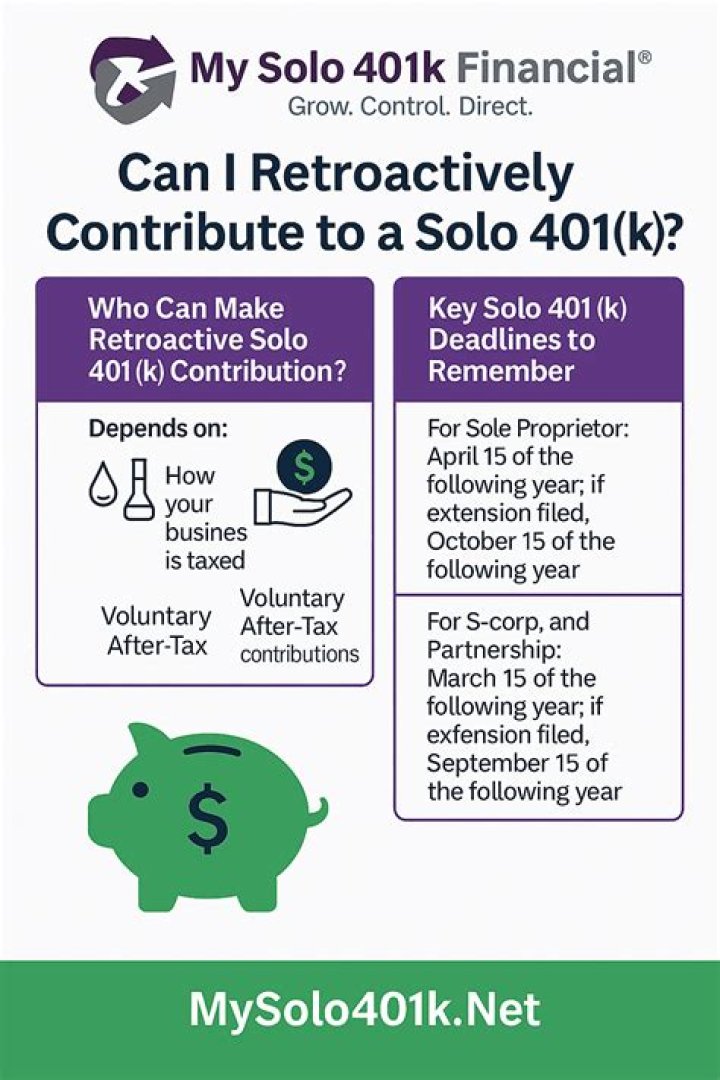
401(k) Plans Contributions for a prior year may not be allowed because an employee is limited to making contributions through payroll deductions.
Can I contribute to 401k and IRA in same year?
The quick answer is yes, you can have both a 401(k) and an individual retirement account (IRA) at the same time. 1 2 However, depending on your individual situation, you may or may not be eligible for tax-advantaged contributions to both of them in any given tax year.
What is the last day to contribute to a Roth IRA for 2020?
You can make 2020 IRA contributions until April 15, 2021.
Can I contribute to IRA if I have 401k?
Short answer: Yes, you can contribute to both a 401(k) and an IRA, but if your income exceeds the IRS limits, you might lose out on one of the tax benefits of the traditional IRA. (Even if you’re ineligible to deduct your IRA contribution, you can still contribute to an IRA.
Are there limits to how much you can contribute to a Roth 401k?
Contribution Limits. You can contribute a maximum of $18,000 in 2015 to a Roth 401(k) – the same amount as to a traditional 401(k). If you’re aged 50 or older, you can contribute an extra $6,000 as a catch-up contribution. These limits are per individual; you don’t have to consider whether you’re married or single.
Do you have to contribute to an IRA if you have a 401k?
You might not be able to take a tax deduction for your traditional IRA contributions if you also have a 401 (k), but that will not affect the amount you are allowed to contribute—up to $6,000, or $7,000 with a catch-up contribution, for 2019.
When do you have to contribute to a Roth IRA?
These are the requirements: 1 It’s been at least five years since your first Roth IRA contribution 2 You and your spouse haven’t owned a primary home in the past two years 3 You use the funds within 120 days of withdrawal
What’s the difference between a 401k and a Roth IRA?
Designated Roth 401 (k) contributions are distinct from Roth IRA contributions. You make designated Roth contributions into a separate Roth account of your 401 (k) plan, and they count toward the 401 (k) contribution limit. Roth IRA plans are retirement plans that you contribute to with after-tax dollars from your compensation.